Handbook for Filing Complaints Against Harmful Business Practices
A practical guide for Indigenous Peoples on using the OECD Guidelines to protect their rights
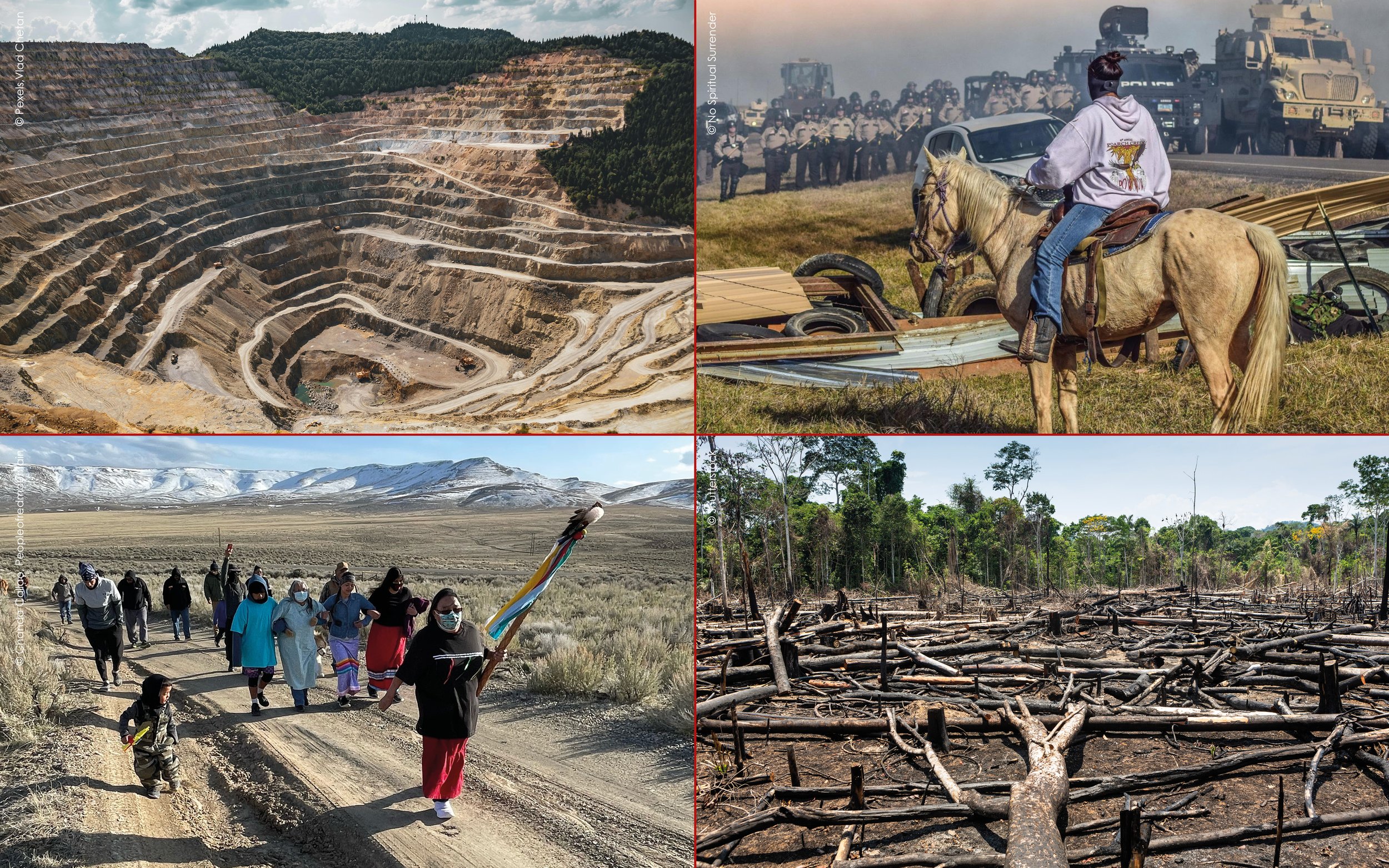
Indigenous Peoples worldwide face increasing threats from large-scale resource extraction, agribusiness, and infrastructure projects carried out on their lands. These activities often result in loss of livelihoods, community disruption, and the erosion of cultural heritage.
To address harmful business practices, Indigenous Peoples can draw on a variety of mechanisms to safeguard their rights. These include legal actions, international human rights procedures, and complaint systems that promote corporate accountability.
About the handbook on the OECD Guidelines complaint system:
It is available in English, Spanish, and Portuguese.
70 pages, PDF.
To the fact sheet:
The factsheet briefly explains the most important contents of the handbook.
It is available in English, Spanish, and Portuguese.
4 pages, PDF.
Why This Handbook?
To address harmful business practices, Indigenous Peoples can draw on a variety of mechanisms to safeguard their rights. These include legal actions, international human rights procedures, and complaint systems that promote corporate accountability.
The OECD Guidelines for Multinational Enterprises on Responsible Business Conductset international standards for how companies should operate responsibly. In the 52 countries that adhere to these Guidelines, National Contact Points (NCPs) review complaints and facilitate dialogue or mediation when companies may not be meeting these standards.
For Indigenous Peoples, this complaint process can serve as an additional—or alternative—pathway to challenge harmful business practices. When integrated into a broader advocacy or defense strategy, it can strengthen efforts to protect rights, lands, and livelihoods. At the same time, it requires careful consideration of its potential benefits and risks.
To make this process more accessible for affected communities, Voices and the SIRGE Coalition—supported by OECD Watch, Indigenous experts, and civil society organizations—developed this handbook. Its purpose is to help communities make informed decisions about whether and how this mechanism can be useful in their specific circumstances.
What Is the Guide About?
This guide introduces the OECD Guidelines and explains why they matter for Indigenous Peoples. It outlines how National Contact Points (NCPs) function and when individuals, communities, or organizations can use the complaint mechanism to raise concerns about corporate conduct.
It also walks readers through the complaint process step by step—from deciding whether to file, to preparing a submission, participating in mediation, and understanding possible outcomes. Each stage includes practical guidance, examples, and answers to common questions.
Finally, the guide shows how the OECD complaint mechanism can be integrated into a broader strategy for justice. It highlights how filing a complaint can complement other advocacy efforts, such as public campaigning, coalition-building or legal strategies.
Who Is This Handbook For?
This handbook is intended for Indigenous Peoples and their frontline communities. It is also useful for organizations that support them. It is designed to help readers assess whether an OECD complaint is an appropriate tool for addressing harmful corporate conduct in a particular situation. It explains the relevance of the Guidelines to Indigenous Peoples, what an OECD complaint can and cannot achieve, and how the process works in practice.