Transition Minerals & the Just Transition Mechanism: Implementing Indigenous Peoples' Rights Through its Operationalization
By Bryan Bixcul, Global Coordinator
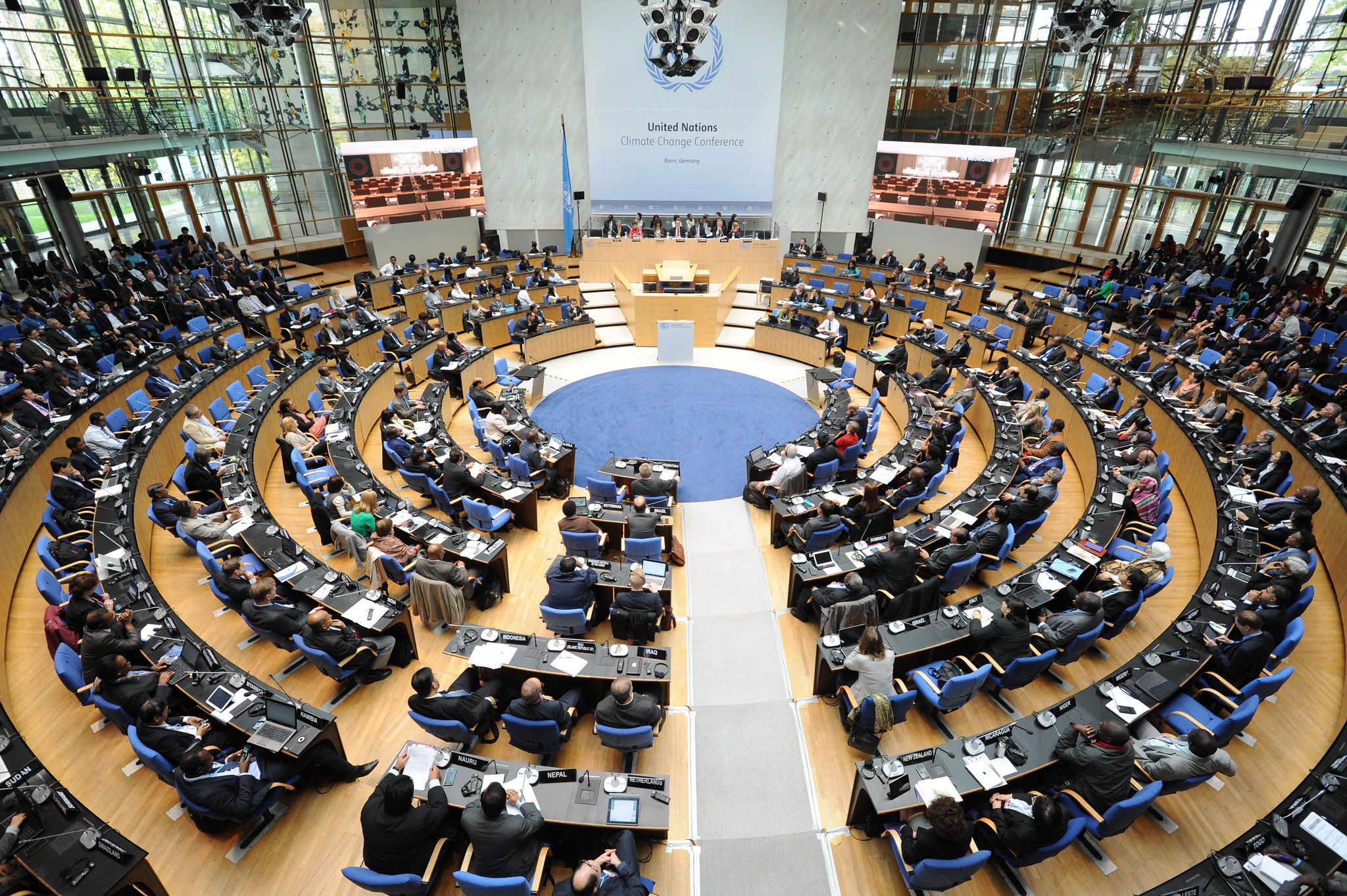
As negotiations begin in Bonn, the operationalization of paragraph 12(i), which affirms Indigenous Peoples' rights to Self-determination, and Free, Prior and Informed Consent (FPIC), may become one of the most important pathways for addressing the impacts of transition mineral extraction through the new Just Transition Mechanism.
The sixty-fourth sessions of the Subsidiary Bodies (SB64) under the United Nations Framework Convention on Climate Change (UNFCCC) have kicked off in Bonn, Germany, marking the beginning of negotiations for operationalizing the Just Transition Mechanism (JTM) established last year at the 30th Conference of Parties (COP30). While public attention often focuses on decisions adopted at COPs, much of the substantive work that shapes those outcomes takes place during these intersessional meetings. Bonn is where technical proposals are developed, political positions are known, and the details of future decisions are debated.
This year, the stakes are particularly high. Parties have begun discussions on the operationalization of the mechanism, including its functions, modalities, and institutional arrangements. Although final decisions are expected to be adopted later this year in Türkiye, much of the architecture of the mechanism is expected to be shaped through the negotiations taking place now, hence the importance of Indigenous Peoples’ advocacy to ensure that the mechanism supports the implementation of Indigenous Peoples’ rights.
Recapping the COP30 Outcomes
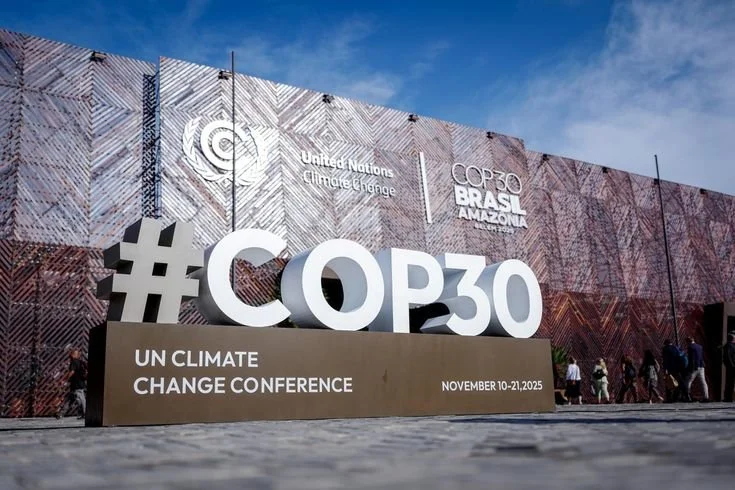
The outcomes adopted at COP30 marked an important milestone for Indigenous Peoples within the Just Transition Work Programme (JTWP).
After years of advocacy, the final decision at COP30 included some of the strongest affirmations of Indigenous Peoples' rights ever adopted under a UNFCCC decision related to just transitions.
In particular, Paragraph 12(i) of the JTWP recognizes the importance of obtaining Indigenous Peoples’ Free, Prior and Informed Consent (FPIC) in accordance with the United Nations Declaration on the Rights of Indigenous Peoples (UNDRIP). It further affirms that all just transition pathways should respect and promote the internationally recognized collective and individual rights of Indigenous Peoples, including the right to Self-determination. Importantly, it also acknowledges the rights and protections of Indigenous Peoples in Voluntary Isolation and Initial Contact (PIACI), marking a significant recognition within the UNFCCC process.
Paragraph 18 further strengthens this rights-based framework by referencing both UNDRIP and the United Nations Guiding Principles on Business and Human Rights. Together, these paragraphs establish an important expectation: that efforts to advance just transitions should be grounded in respect for human rights and the rights of Indigenous Peoples.
At the same time, COP30 negotiations became another arena for geopolitical tensions surrounding the control, supply, and governance of transition minerals. Proposals to include explicit references to transition minerals, the impacts of mineral extraction, and mineral governance were ultimately removed from the final outcome after extensive negotiations among Parties. For many Indigenous Peoples and advocates, this represented a missed opportunity to acknowledge the growing pressures that the global demand for transition minerals is placing on Indigenous Peoples’ lands as well as on ecosystems.
Addressing the Impacts of Transition Mineral Extraction through the Just Transition Mechanism
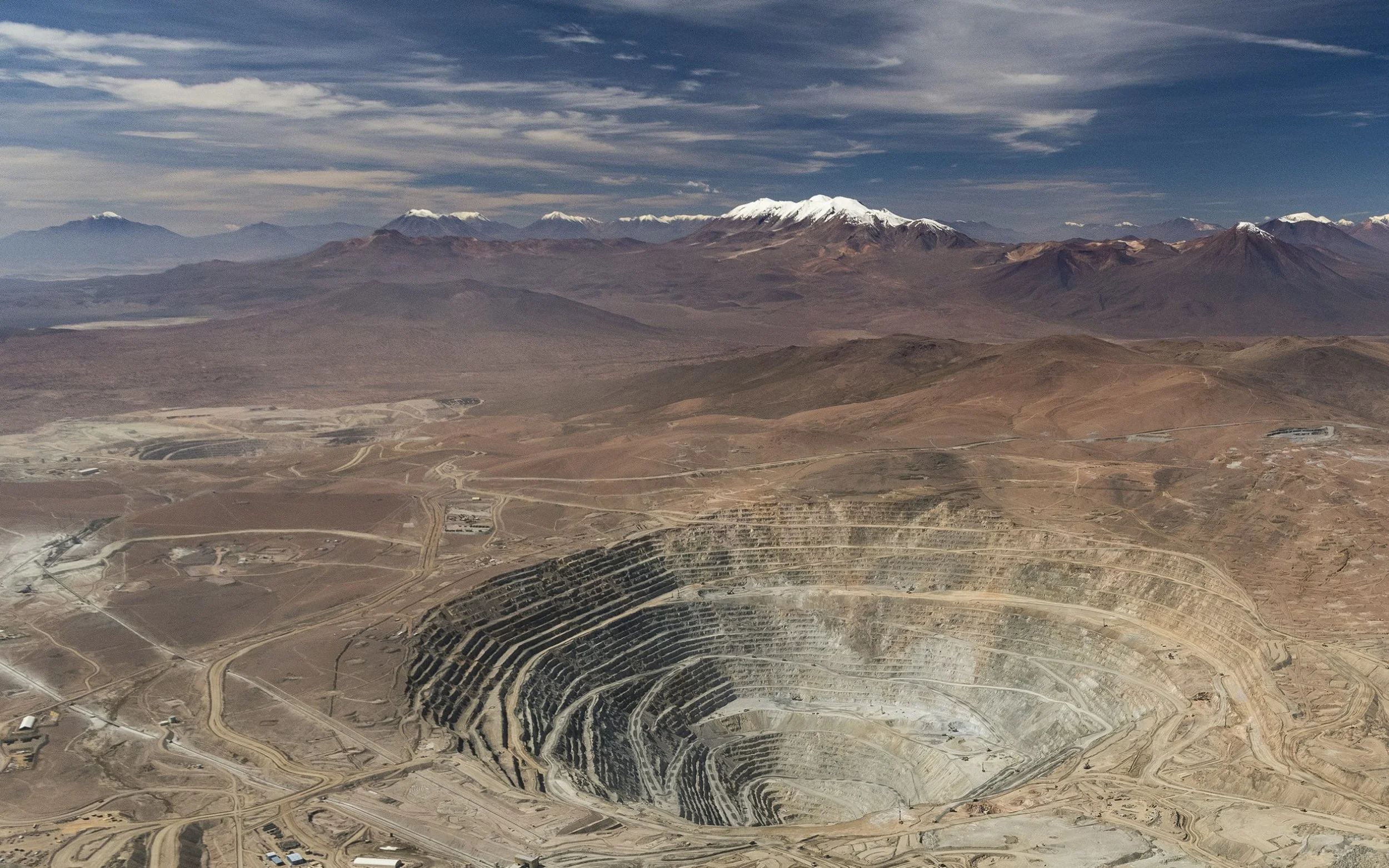
“The removal of references to the impacts of transition mineral extraction (…) should not discourage Indigenous Peoples, advocates, and other stakeholders from continuing to advance solutions to the growing social, environmental, and human rights challenges associated with transition mineral extraction”.
The removal of references to the impacts of transition mineral extraction from the COP30 outcome should not be interpreted as the end of efforts to address these issues within the UNFCCC's just transition regime. More importantly, it should not discourage Indigenous Peoples, advocates, and other stakeholders from continuing to advance solutions to the growing social, environmental, and human rights challenges associated with transition mineral extraction. While the final decision did not retain explicit language on these issues, it did retain paragraph 12 and its 22 subparagraphs, which contain important provisions that Indigenous Peoples, and many Parties, view as principles for enabling equitable and inclusive just transitions. The decision also established a mandate to develop a new Just Transition Mechanism.
The challenge before Indigenous Peoples now is to identify how the commitments already secured can be translated into practical action. The operationalization of paragraph 12(i), together with the references to UNDRIP and the United Nations Guiding Principles on Business and Human Rights contained in paragraph 18, provides a foundation for addressing many of the concerns that motivated calls for stronger language on transition minerals in the first place.
Over the past year, Indigenous Peoples have already begun developing proposals for how this can be achieved. Through submissions to the UNFCCC on the operationalization of the Just Transition Mechanism, participation in the JTWP dialogues, and position papers developed by Indigenous Peoples and allies, a growing body of recommendations has emerged. These proposals share a common understanding: the Just Transition Mechanism cannot credibly support just transitions while ignoring one of the most significant sources of rights violations.
The proposals developed by Indigenous Peoples recognize that addressing the impacts of transition mineral extraction will require more than a reference in a negotiated text. They point, instead, to the design of the Just Transition Mechanism itself. By integrating considerations can potentially address these impacts across the mechanism's functions, modalities, activities, outputs, and by securing formal participation of Indigenous Peoples in its institutional arrangements, Parties have an opportunity to ensure that the impacts of transition mineral extraction are addressed within its work.
Recommendations from Indigenous Peoples
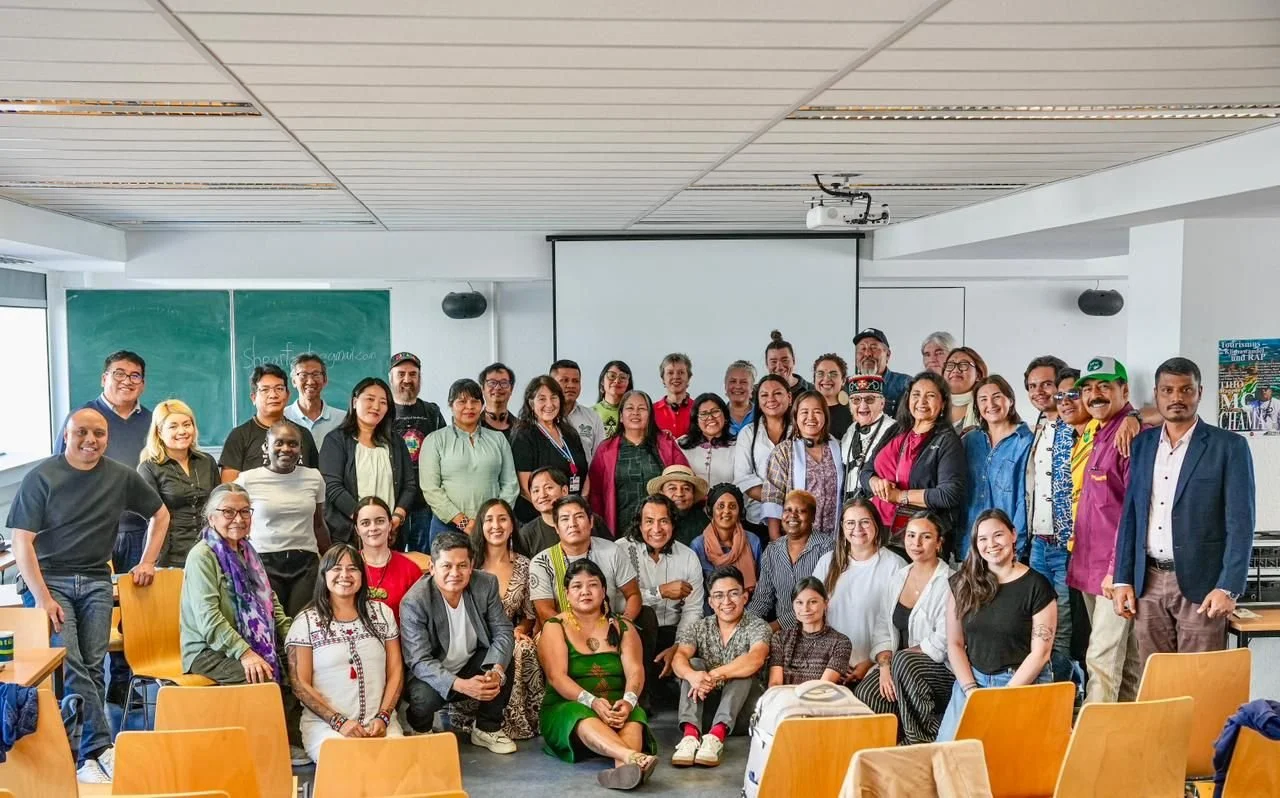
Indigenous Peoples’ caucus in Bonn, Germany.
Recommendations by Indigenous Peoples go beyond calls for participation alone. Taken together, they outline a vision for a Just Transition Mechanism that can help translate the commitments contained in paragraph 12(i) into practical implementation while creating institutional pathways to address the risks and impacts associated with, among other issues, transition mineral extraction.
Central to this vision is the recognition that Indigenous Peoples should not simply be consulted on the work of the mechanism, but should participate formally and meaningfully in its institutional arrangement. Effective participation would help ensure that the mechanism's priorities, activities, and outputs are informed by the experiences of Indigenous Peoples and communities directly affected by transition-related investments and projects.
The recommendations also emphasize the importance of embedding Indigenous Peoples' rights throughout the work of the mechanism. Policy guidance could support Parties in integrating Indigenous Peoples' rights, including Free, Prior and Informed Consent, into national just transition planning and implementation. Technical assistance and capacity-building could help strengthen implementation of these commitments in practice. Knowledge-sharing activities could facilitate the exchange of experiences and good practices related to respecting Indigenous Peoples' rights in transition-related sectors and activities, including related to mineral extraction.
Equally important is the proposal to include modalities that support a standing agenda item and recurring activities dedicated to the implementation of paragraph 12(i). Such a space would provide an ongoing opportunity to exchange experiences, identify challenges, and discuss emerging issues affecting Indigenous Peoples in the context of just transitions. It would also create a dedicated forum where topics that are often difficult to address in negotiated text, such as the impacts of transition mineral extraction, renewable energy development, and related infrastructure, could be examined in a sustained and practical manner.
The Limitations of the Just Transition Mechanism
At the same time, it is important not to overstate what the Just Transition Mechanism can achieve. The mechanism is not a panacea for the challenges associated with transition mineral extraction, nor was it created for that purpose. Paragraph 25 establishes the mechanism as a means of enhancing international cooperation, technical assistance, capacity-building, and knowledge-sharing in support of just transitions. It is not a regulatory body, nor does it have a mandate to oversee or govern mineral extraction activities.
Its effectiveness will ultimately depend on Parties’ level of ambition and political will, and will be limited by the design of its functions, modalities, activities, outputs, and institutional arrangements, as well as the willingness of governments and other actors to implement its recommendations and make use of its resources. Even a well-designed mechanism will have limitations in its ability to influence decisions that are often taken outside the UNFCCC process.
Yet these limitations do not diminish the importance of the opportunity before us. While the mechanism alone cannot resolve the challenges associated with transition mineral extraction, it can help strengthen implementation of Indigenous Peoples' rights, improve understanding of emerging risks and good practices, and create spaces for dialogue, learning, and cooperation. For Indigenous Peoples, these are not insignificant outcomes. They may help shape how just transition pathways are understood, designed, and implemented in the years ahead.
The Geopolitical Moment
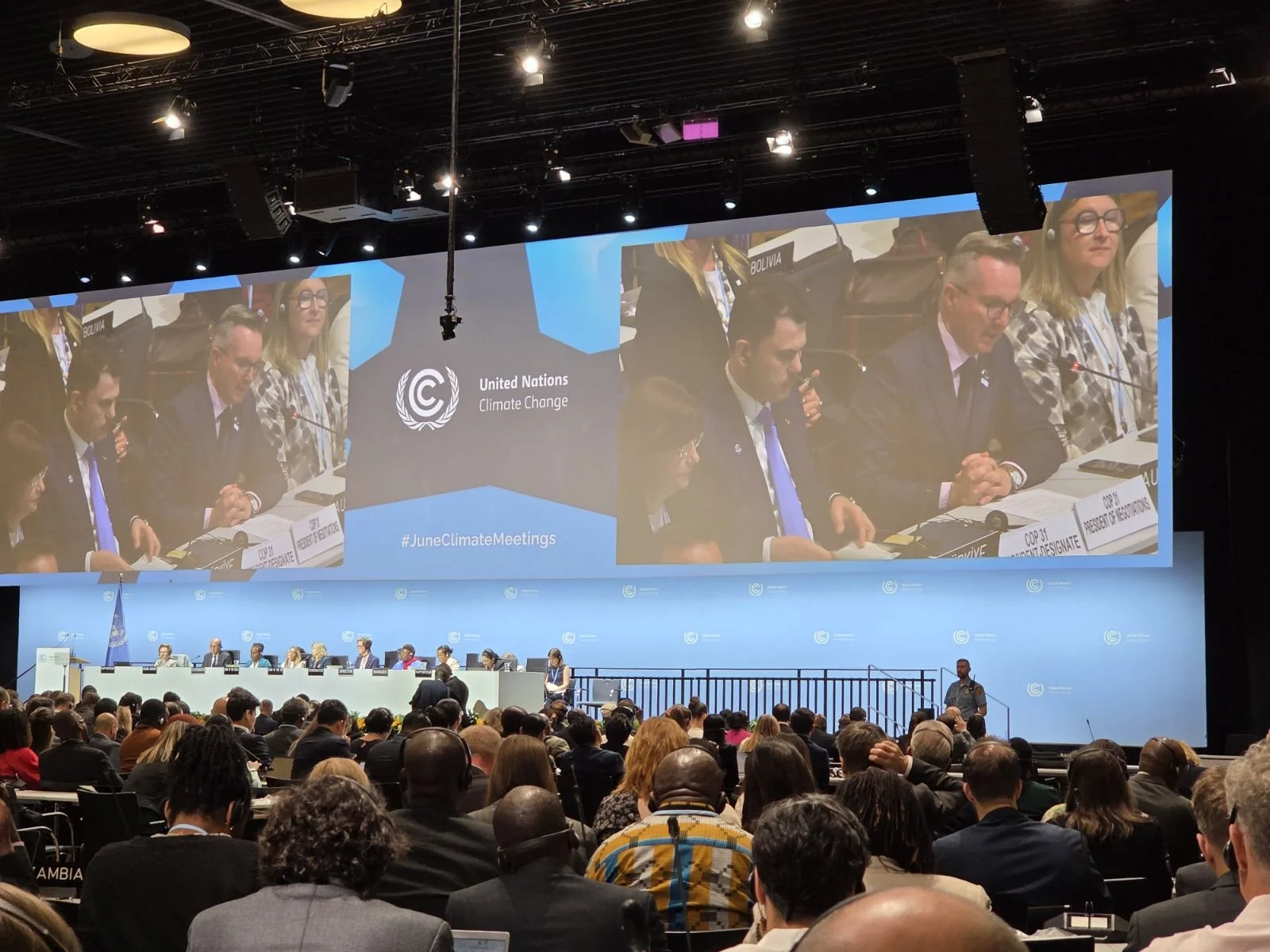
COP31 President, Chris Bowen (Australia), addresses SB64, highlighting that accelerating the energy transition will ease shocks in the world’s energy systems amid global geopolitical uncertainty.
In his opening statement to SB64, COP31 President Chris Bowen (Australia) framed the current moment through the lens of energy security, geopolitical instability, and the accelerating transition away from fossil fuels. Referring to disruptions in global energy markets, supply chain vulnerabilities, and growing geopolitical uncertainty, he argued that the answer lies in "more clean energy, more electrification, less dependence on fossil fuels, and more energy sovereignty and reliability." He emphasized that "accelerating the energy transition will ease shocks to our energy systems" and pointed to renewable energy as a source of resilience in an increasingly uncertain world. As he noted, while solar energy must travel 150 million kilometres from the sun to the earth, it does not have to travel through the Strait of Hormuz. "The wind cannot be sanctioned" and "hydro energy cannot be blockaded." Throughout his remarks, the energy transition was presented not only as a climate necessity, but increasingly as a matter of economic resilience, national security, strategic autonomy, and protection against future geopolitical shocks.
This narrative is becoming increasingly influential. As countries seek to reduce dependence on fossil fuel imports, strengthen energy security, expand renewable energy systems, modernize electricity grids, and scale battery storage, demand for transition minerals is expected to skyrocket. Yet discussions about accelerating mineral supply often focus on strategic competition, investment, and industrial policy, while Indigenous Peoples' rights are treated as risks to manage, impacts to mitigate, or ethical considerations to balance against broader economic objectives.
For Indigenous Peoples, the issue is fundamentally different. Indigenous Peoples are not stakeholders in the energy transition; they have rights. Mineral demand for climate action and energy autonomy does not diminish Indigenous Peoples’ rights to Self-determination or the right to Free, Prior and Informed Consent. Indigenous Peoples have the right to say yes, the right to say no, and the right to establish the conditions under which development may proceed. An energy transition for climate action and energy autonomy that destroys communities and ecosystems is not "just," is not "green," and is not "sustainable." It is violence. It is colonization. And we have the right to oppose it and refuse it.
The Work in Bonn
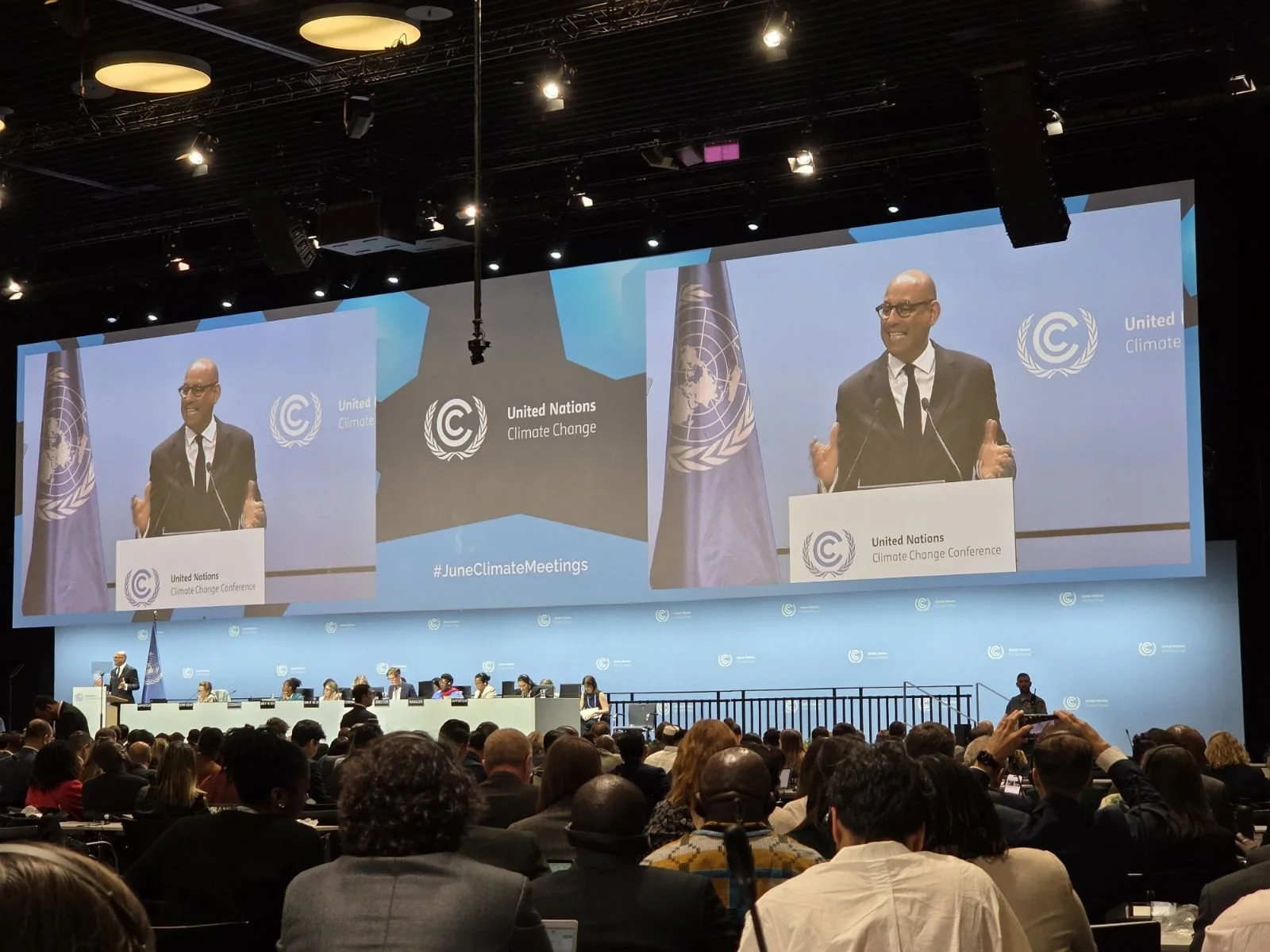
Simon Stiell, Executive Secretary of the United Nations Framework Convention on Climate Change, addresses SB64.
The challenges ahead are daunting, but they should not lead to paralysis. Instead, they should lead to greater solidarity, stronger alliances, and renewed efforts to develop strategies that center the priorities and rights of Indigenous Peoples. Previous generations worked to secure recognition of Indigenous Peoples' rights in international law and policy. Our responsibility is to continue that struggle by ensuring those rights are implemented in practice.
That is why Indigenous Peoples must remain engaged in the negotiations underway in Bonn and beyond. If we are not at the table, we are on the table. At a moment when growing demand for transition minerals is being driven not only by climate action, but also by concerns over energy security and geopolitical competition, Indigenous Peoples cannot afford to be passive observers. We must continue advancing our climate solutions, defending our rights, and shaping the policies and institutions that will influence the future of our communities.
Ultimately, the Just Transition Mechanism will mean little if it does not deliver tangible benefits for Indigenous communities and our ecosystems.
