The G7 and the Centrality of Indigenous Peoples’ Rights
By Yblin Roman Escobar and Juan Diego Beltrán, SIRGE Coalition

G7 leaders and G7 partners.
In June 2026, leaders of the G7 met in Évian-les-Bains, France, at a tense moment for international cooperation. The conflict involving Iran had increased pressure on energy security, including fears of disruption through the Strait of Hormuz, one of the world’s most important routes for oil and gas. At the same time, military conflicts, trade disputes and economic uncertainty shaped a broad G7 agenda that included the global economy, energy security, international finance, partnerships with emerging and developing economies, biodiversity and climate.
Within this broader agenda, critical minerals were one area where the G7 took concrete action. Leaders adopted the G7 Declaration on Securing Supply Chains for Critical Minerals and launched the G7 Critical Minerals Resilience and Production Alliance. The focus was on diversifying supply, increasing processing and recycling capacity, working with producer countries, mobilising finance, improving traceability and promoting high-quality standards.
As the G7 shows, the discussion of the so-called critical minerals is not only technical. Critical minerals are now part of debates on the energy transition, trade, digital technologies, artificial intelligence, economic security and geopolitics.
Particularly relevant in the declaration, is the commitment to high-quality standards, responsible mining, transparency and sustainable supply chains. If the G7 wants to secure more minerals, how they are obtained should be a foundational question. Extraction, processing and trade have direct consequences for people, territories and ecosystems.
The G7 also set concrete objectives. One is to reduce dependence on any single supplier of rare earths and permanent magnets to below 60 per cent by 2030, with the longer-term ambition of reaching 50 per cent. The direction is similar to the European Union’s Critical Raw Materials Act, which sets its own 2030 benchmarks for extraction, processing, recycling and diversification.
But what do high-quality standards mean in practice?
Can critical mineral supply chains really be considered secure and resilient if the rights of Indigenous Peoples, whose lands and territories hold many of these minerals, are not explicitly part of the equation?
The wider move towards plurilateral cooperation
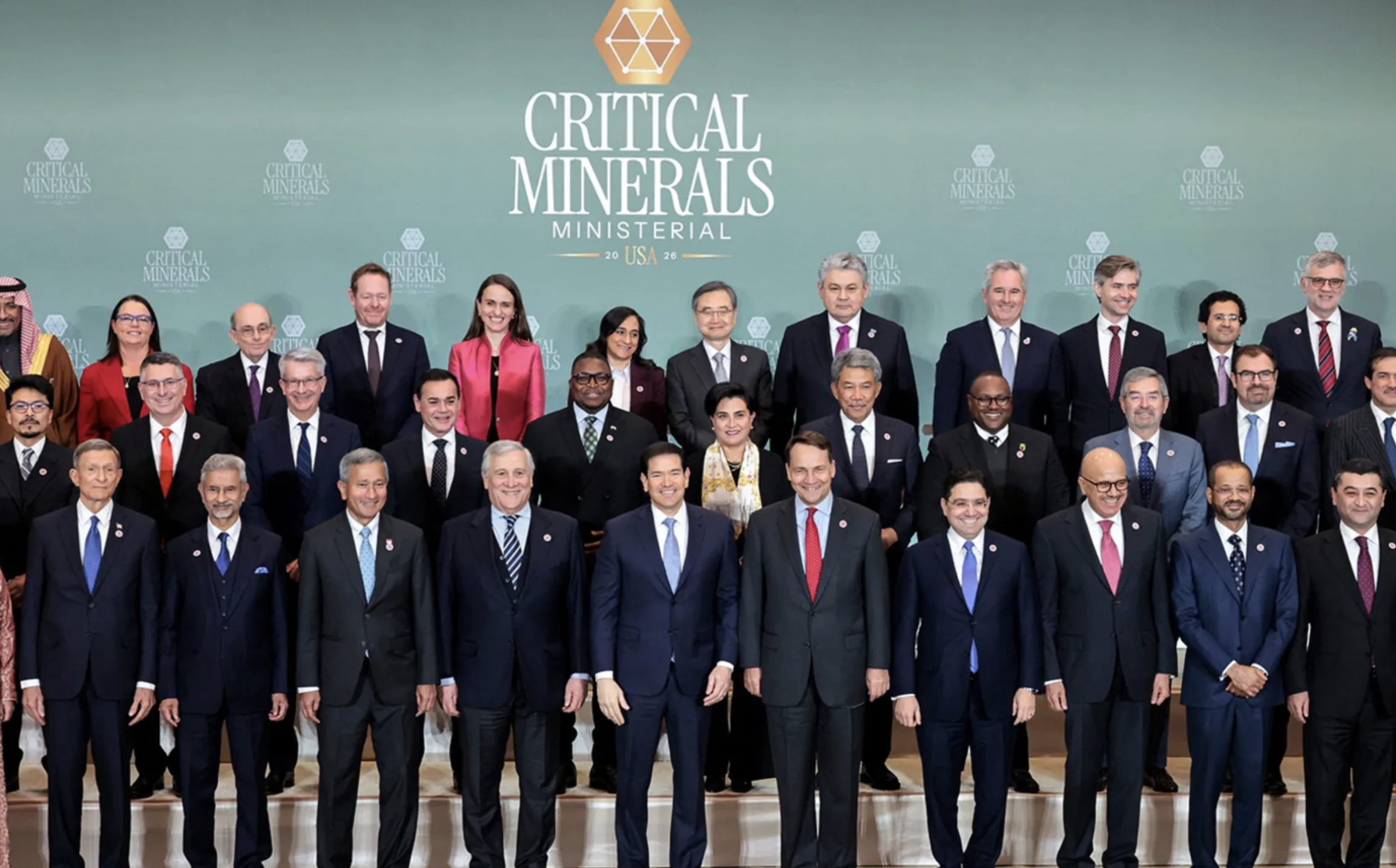
“Over the past few years, governments have increasingly turned to smaller groups of countries and strategic partnerships to secure critical minerals, coordinate investment and reduce dependencies”.
The G7 Declaration did not appear in isolation. Over the past few years, governments have increasingly turned to smaller groups of countries and strategic partnerships to secure critical minerals, coordinate investment and reduce dependencies.
An important precedent was the Minerals Security Partnership, launched by the United States and a group of partners, including several G7 members and the European Union. Its purpose was to mobilise public and private investment in mining, processing and recycling projects while promoting stronger environmental, social and governance standards.
The partnership later expanded through the MSP Forum, bringing mineral-producing countries more directly into the discussion. More recently, the MSP evolved into FORGE, the Forum on Resource Geostrategic Engagement, with a broader focus on strategic cooperation and supply chain resilience.
At the same time, bilateral mineral partnerships have multiplied, and regional measures such as the EU’s Critical Raw Materials Act pursue many of the same goals: more diversified supply, greater processing and recycling capacity, stronger partnerships and less dependence on a small number of countries.
The G7 Alliance is part of this wider move towards plurilateral cooperation. These initiatives differ, but together they are beginning to influence how minerals will be sourced, financed, processed and traded.
The growing number of partnerships also creates a practical problem. Without some common direction, different initiatives may apply different expectations, particularly when it comes to human rights, environmental protection and Indigenous Peoples’ rights.
Indigenous Peoples’ rights and secure supply chains

“The G7 Declaration does not explicitly mention Indigenous Peoples. It does not refer to Free, Prior and Informed Consent, Self-determination or the United Nations Declaration on the Rights of Indigenous Peoples.
That omission sits uneasily beside the G7’s commitments to high-quality standards, responsible mining and resilient supply chains”.
An estimated 54 % of the minerals needed for the energy transition, and 65% of copper, are located on or near Indigenous Peoples’ lands and territories. Many of the supply chains the G7 wants to secure will therefore depend, directly or indirectly, on decisions affecting Indigenous Peoples, their lands, territories and resources and even their cultural survival.
Yet the G7 Declaration does not explicitly mention Indigenous Peoples. It does not refer to Free, Prior and Informed Consent, Self-determination or the United Nations Declaration on the Rights of Indigenous Peoples.
That omission sits uneasily beside the G7’s commitments to high-quality standards, responsible mining and resilient supply chains.
Respect for Indigenous Peoples’ rights is an obligation in itself under International law. It should not need to be justified by business or geopolitical interests. But there is also a direct link with the G7’s own objectives.
A supply chain is not secure when it depends on projects affected by unresolved land claims, lack of consent, displacement, environmental damage or the criminalisation of Indigenous defenders.
Across the world, Indigenous Peoples have faced and are facing mining and infrastructure projects planned or developed on their lands without their meaningful participation or consent. We do not need to look far for examples. Under the EU Critical Raw Materials Act, which shares many of the G7's goals on diversification, security of supply and high standards, three Strategic Projects have been designated on Sámi lands, and none has obtained the Free, Prior and Informed Consent of the affected Sámi rights-holders.
The consequences can be devastating for livelihoods, cultures and, in some cases, cultural and physical survival. Such projects can also lead to years of opposition, legal disputes, delays and instability.
Indigenous Peoples’ rights therefore cannot be treated as an extra consideration to be added once the project has already been designed and all decisions have been made. But rather, as rights holders, they need to shape decisions from the beginning.
This is also relevant to the G7’s emphasis on partnerships with producer countries.
Agreements between governments may be described as mutually beneficial, but that does not mean that Indigenous Peoples whose territories are affected took part in shaping them or consented to the projects that may follow. It is essential to highlight that Indigenous Peoples are not simply stakeholders in these processes. They are rights-holders and governance actors, with internationally recognised rights to self-determination and to their lands, territories and resources.
The same applies to benefit-sharing. Discussions about jobs, revenues or community investment must be based on prior consent through FPIC. Benefits cannot replace consent. Nor should they be used to pressure Indigenous Peoples to accept projects already designed by governments, companies or investors.
Traceability also needs a wider scope. Knowing where a mineral comes from or how much carbon was emitted in producing it is not enough. A credible traceability system should also help establish whether land rights were respected, whether FPIC was obtained where required, whether impacts were addressed and whether communities have access to remedy.
For the G7, resilience means diversifying suppliers, increasing processing capacity and building strategic stockpiles. But there is another side to resilience.
A supply chain built on unresolved land conflicts, lack of consent or violations of Indigenous Peoples’ rights may be strategically important. But that does not make it secure.
The need for a common direction
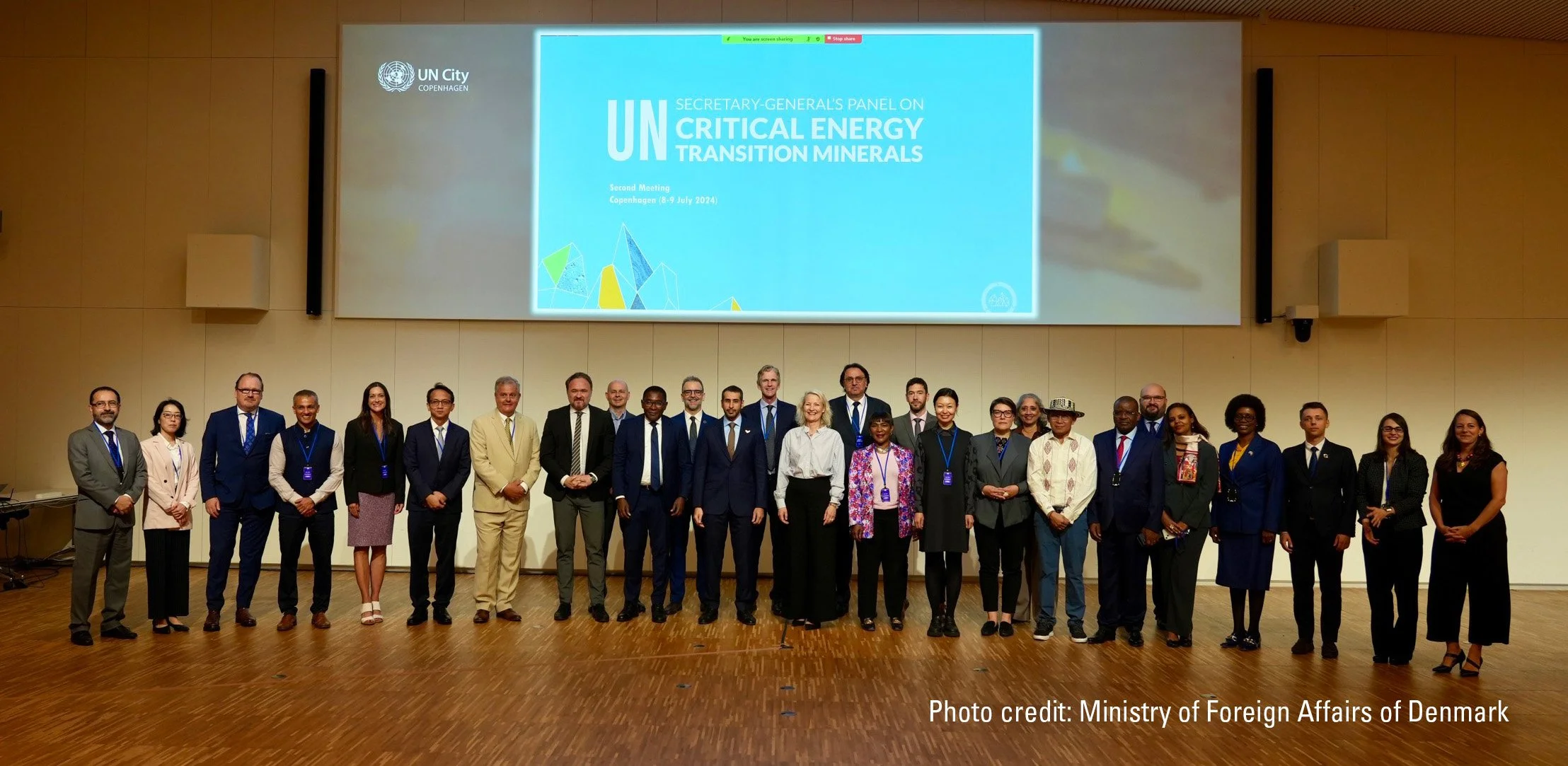
Secretary-General's Panel recommendations on Critical Energy Transition Minerals in 2024.
Different groups of countries are now developing their own approaches to investment, supply security, standards and partnerships with producer countries. The issue is not that these initiatives exist. The issue is whether they pull in different directions.
High-quality standards should not mean one thing under the G7, another under FORGE and something different again in bilateral agreements. Respect for Indigenous Peoples’ rights should not depend on which government, investor or partnership is behind a project.
In 2024, the United Nations Secretary-General’s Panel on Critical Energy Transition Minerals developed seven Guiding Principles for the governance of critical mineral value chains. The Panel was co-chaired by Ditte Juul Jørgensen, then Director-General for Energy at the European Commission, and Nozipho Joyce Mxakato-Diseko of South Africa. It brought together governments, Indigenous Peoples, civil society, industry and international organisations.
Its first principle states that human rights must be at the core of all mineral value chains. The Panel also calls explicitly for respect for Indigenous Peoples’ rights, including Self-determination and Free, Prior and Informed Consent, in line with UNDRIP).
The principles of the panel can be used across the many national, regional and plurilateral initiatives now being developed as an overarching framework.
The G7’s reference to high-quality standards gives it a clear opportunity to do this. Those standards should draw from the principles agreed through the UN Secretary-General’s Panel, including its explicit recognition of Indigenous Peoples’ rights.
Responsible mining cannot have a different meaning depending on the partnership or country involved. Some basic principles should apply everywhere: respect for human rights, environmental integrity, equity and Indigenous Peoples’ rights.
The real test for the G7 comes next
The G7 has placed critical minerals within its wider agenda on economic security, resilience and international cooperation. Its Declaration and new Alliance show the determination of its members to diversify supply, mobilise investment and strengthen access to minerals needed for the energy transition and other strategic technologies.
Its commitments to high-quality standards, responsible mining, transparency and partnerships with producer countries are welcome.
What matters now is how they are applied and how the “high-standard” ambition will be translated into concrete safeguards.
If the standards are genuinely high, they must include Indigenous Peoples’ rights. And if the supply chains are to be secure, they cannot rely on unresolved land conflicts, projects without consent or damage to the peoples whose territories hold many of the minerals being sought.
There can not be a just, resilient or secure transition without respecting Indigenous Peoples’ rights.
